What's the Difference Between Zero Sugar and Diet Soda? The Complete Guide
What's the Difference Between Zero Sugar and Diet Soda? The Complete Guide
You stand in the soda aisle, staring at rows of cans. Some cans read "Diet". Other cans read "Zero Sugar". You ask yourself what sets zero‑sugar soda apart from diet soda. Both drinks deliver zero calories. Both drinks use artificial sweeteners. Real differences still exist between them. This article covers their ingredient details, taste performance, and related health effects.
The Short Answer
People want to know the real gap between zero‑sugar soda and diet soda. The main gap comes from sweetener mixes. Diet sodas mostly use aspartame as their only main sweetener. Zero sugar sodas often combine aspartame and acesulfame potassium (Ace‑K). This mix produces a flavor closer to real table sugar. Zero sugar sodas also carry adjusted flavor notes. These notes help the drink copy the original soda taste more accurately.
History and Sweetener Differences
|
|
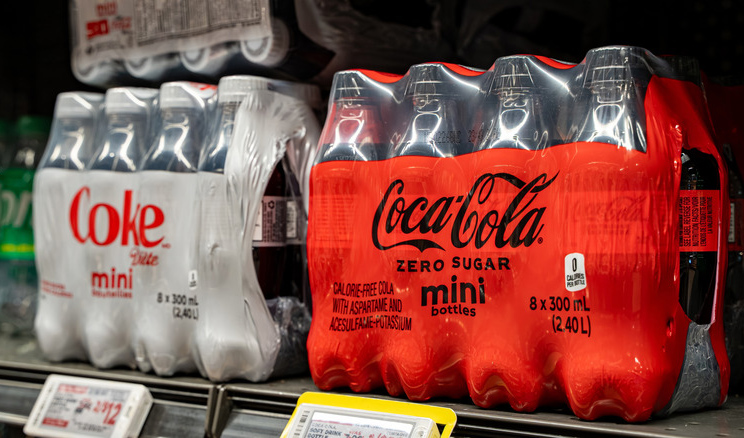
Diet soda first appeared in the 1950s. No‑Cal was the first diet soda product. This ginger ale drink used cyclamate for sweetness. Coca‑Cola launched Tab in the 1960s. Tab took saccharin as its sweetener. Diet Coke hit the market in the 1980s. Its core sweetener was aspartame. Zero sugar soda arrived much later. Coca‑Cola Zero Sugar launched in 2005. It targeted buyers who wanted the taste of standard Coke. Pepsi Zero Sugar came out after that product.
Sweetener choices create the key separation. Diet sodas commonly rely only on aspartame. Aspartame tastes 200 times sweeter than regular sugar. It brings a clean sweet feeling on the tongue. Zero sugar sodas use aspartame mixed with acesulfame potassium (Ace‑K). Ace‑K also |
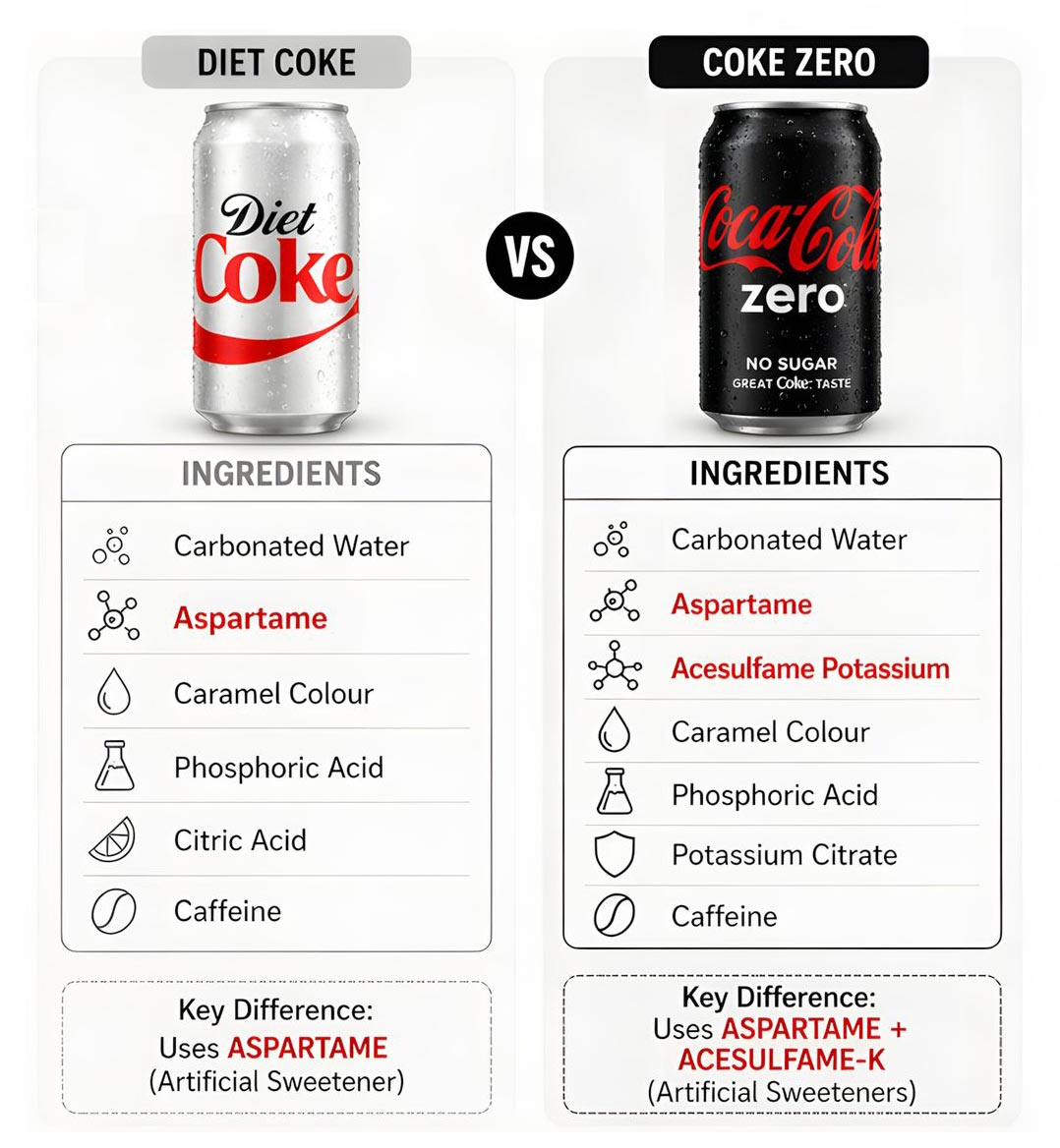
hits 200 times the sweetness level of sugar. This mixture builds a flavor profile much like real sugar. A small number of zero‑sugar sodas add sucralose or stevia into their formula.
Taste, Marketing, and Nutritional Comparison
Taste judgement changes from person to person. Many drinkers can tell the two soda types apart. Diet sodas usually feel
lighter inside your mouth. They leave a noticeable artificial after‑taste. Makers tune zero‑sugar sodas to match regular
soda flavor. These drinks feel fuller in your mouth. They leave less artificial after‑taste. Blind taste tests show many testers
pick zero‑sugar sodas. Some drinkers still prefer diet soda flavors.
Marketing shapes public views of these two soda lines. Brands pushed diet soda mainly toward female buyers. Zero‑sugar
soda targets wider consumer groups. Men sit inside this target group. Diet Coke uses silver‑and‑red package artwork.
Coke Zero uses black‑and‑red package artwork. Diet soda ads focus on weight‑related benefits. Zero‑sugar soda ads
highlight its original‑like drink flavor.
|
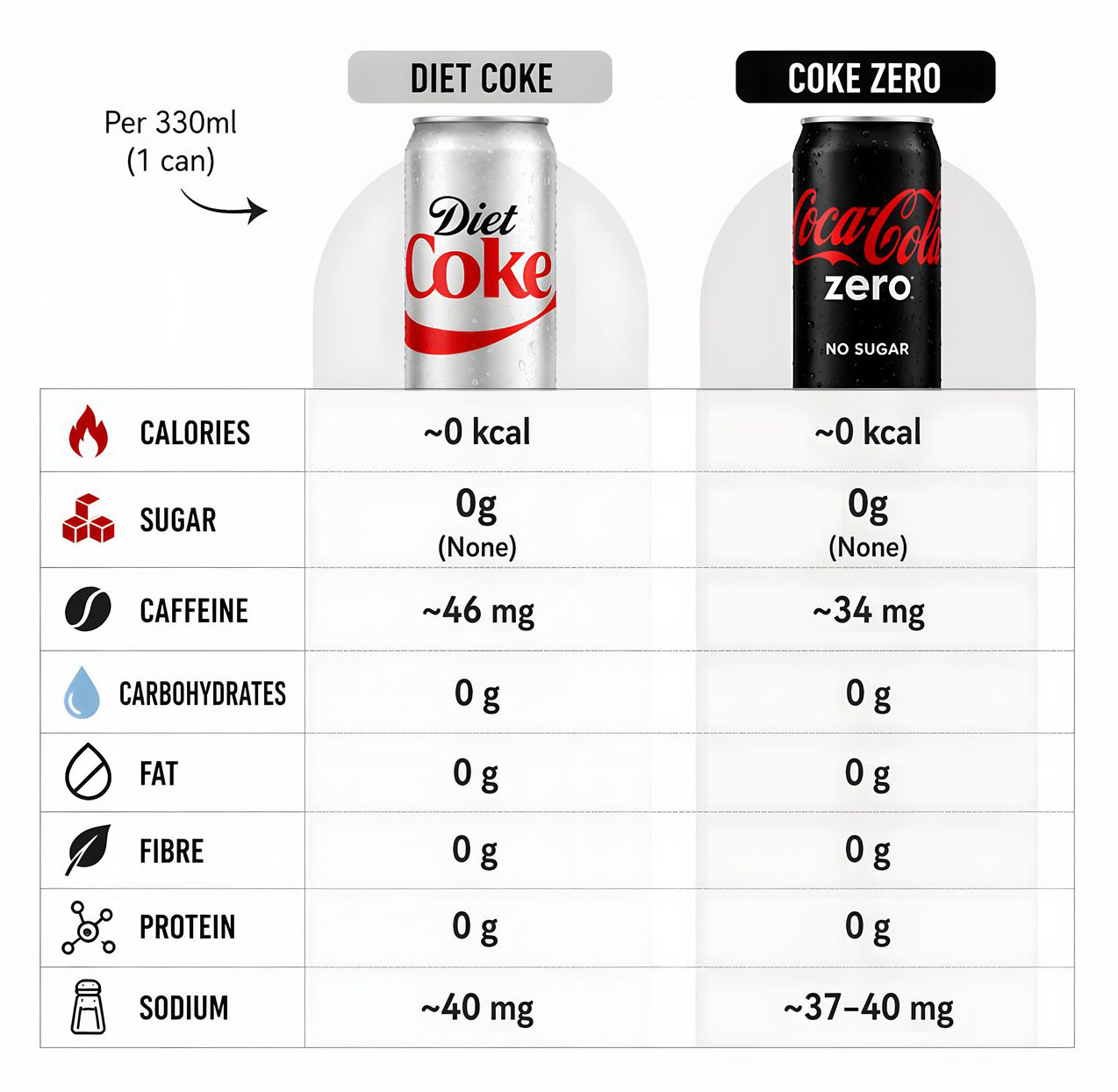
Here is a nutritional comparison:
Diet Coke (12 oz): 0 calories, 0g sugar, 46mg caffeine, sweetened with aspartame. Coke Zero Sugar (12 oz): 0 calories, 0g sugar, 0g sugar, 46mg caffeine, sweetened with aspartame and Ace‑K. Diet Pepsi (12 oz): 0 calories, 0g sugar, 35mg caffeine, sweetened with aspartame. Pepsi Zero Sugar (12 oz): 0 calories, 0g sugar, 38mg caffeine, sweetened with aspartame and Ace‑K.
The nutrition data looks very much alike. You see nearly identical nutrition facts for both soda groups. |
|
Health Considerations
Diet soda and zero‑sugar soda create ongoing public debate. Some research papers say artificial sweeteners may disturb human gut microbiome. Other research links these sweeteners to stronger cravings for real sugar. The FDA marks these sweeteners as safe for normal use. You want to cut down sugar intake. Both soda types work better than full‑sugar regular soda. Plain water still ranks as the healthiest drink choice. The two soda options show very similar health outcomes.
Related Beverages: Soda Water and Dirty Soda
We will look at several connected drink types before closing this guide. What is soda water? People also name it club soda. It is carbonated water. Makers add minerals such as sodium bicarbonate and potassium sulfate into it. It carries zero sugar, zero calories, and zero artificial sweeteners. Soda water acts as a healthy substitute for standard soda.
|
|
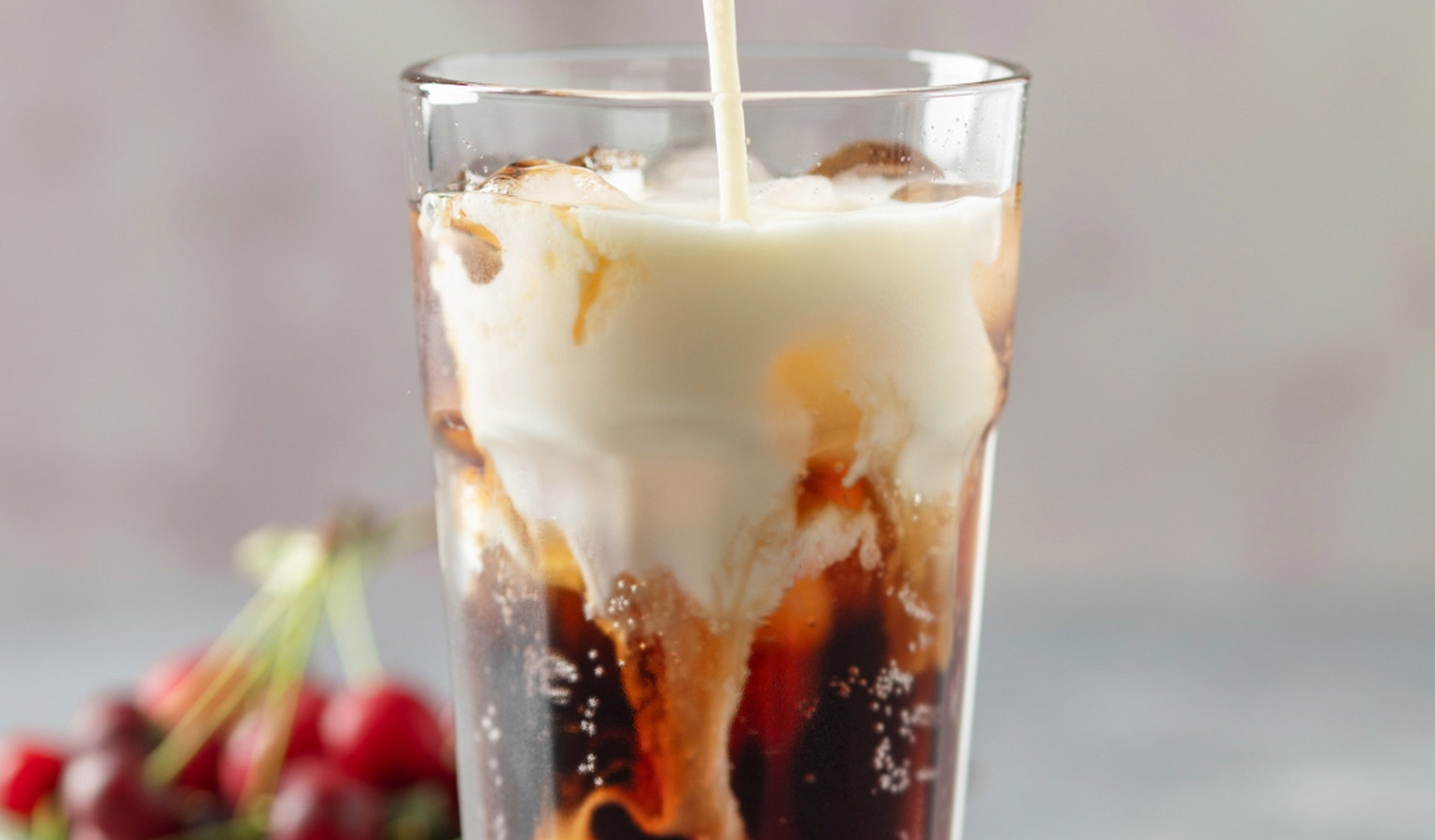
Dirty soda represents one popular modern drink. What is dirty soda? It is a non‑alcohol mixed drink. People combine soda, flavored syrups, cream, coconut products, or fruit purees for this drink. It started in Utah. Local Mormon communities avoided alcohol and created fun custom drinks. Its creamy texture forms one big feature of dirty soda. It is a flexible custom drink. It gained huge viral popularity on TikTok. |
Dirty Soda Recipe and Healthiest Soda
You can make this viral drink at home. Use this simple dirty soda recipe. Fill a tall glass with ice cubes. Pour 12 ounces of your preferred soda into the glass. Add 1 to 2 tablespoons of flavored syrup. Coconut, vanilla, raspberry, and caramel work well for syrup picks. Pour in a small amount of half‑and‑half or coconut cream. Move your spoon and stir the liquid slowly. Some people drop in lime juice or a tiny pinch of salt. This home recipe supports easy personal adjustment.
We now talk about drink health. What is the healthiest soda? Water mixed with fresh lemon or lime squeeze takes that spot. You want carbonated fizz. Plain seltzer or sparkling water gives you the best pick. These drinks hold no sugar, no artificial sweeteners, and no tooth‑damaging acids. Any drink without sugar, artificial sweeteners, and harmful acids sits in the healthiest category.
Hydration and Expiration Questions
Many people ask one common question: does soda dehydrate you? Caffeine inside some soda delivers mild diuretic
effects. This substance makes your body produce more urine. Soda still contains large amounts of water. Most people get
net hydration from one single soda can. One can of soda will not create major dehydration effects. Water remains your top
choice for body hydration.
|
You find an old soda can in storage. You may wonder: does soda expire? The short answer is yes. Its expiration works differently from milk. Old soda will not make you sick. Its drinking quality drops over time. The drink develops unpleasant taste. Carbon dioxide escapes out of the can. Your soda turns flat. Its original flavor grows dull. Throw away cans with bulging surfaces or heavy rust. |
|
Production and Consistency
Basic soda production knowledge helps you understand drink consistency. A soda filling machine fills cans and bottles at high running speeds. It seals every container to trap carbon dioxide inside. The machine measures syrup and carbonated water with high precision. The soda filling machine serves as critical equipment for global soda businesses. It fills thousands of cans every hour. It keeps uniform taste across every finished can.
The Bottom Line
We return to our opening question. What's the difference between zero sugar and diet soda? Sweetener blend creates the main difference. Diet sodas mostly use aspartame alone. Zero sugar sodas mix aspartame and acesulfame potassium (Ace‑K). This mixture brings flavor closer to real sugar.
You pick whichever soda tastes better for your personal preference. Both options supply zero‑calorie drinking solutions. This answer sums up the core difference between zero‑sugar soda and diet soda.