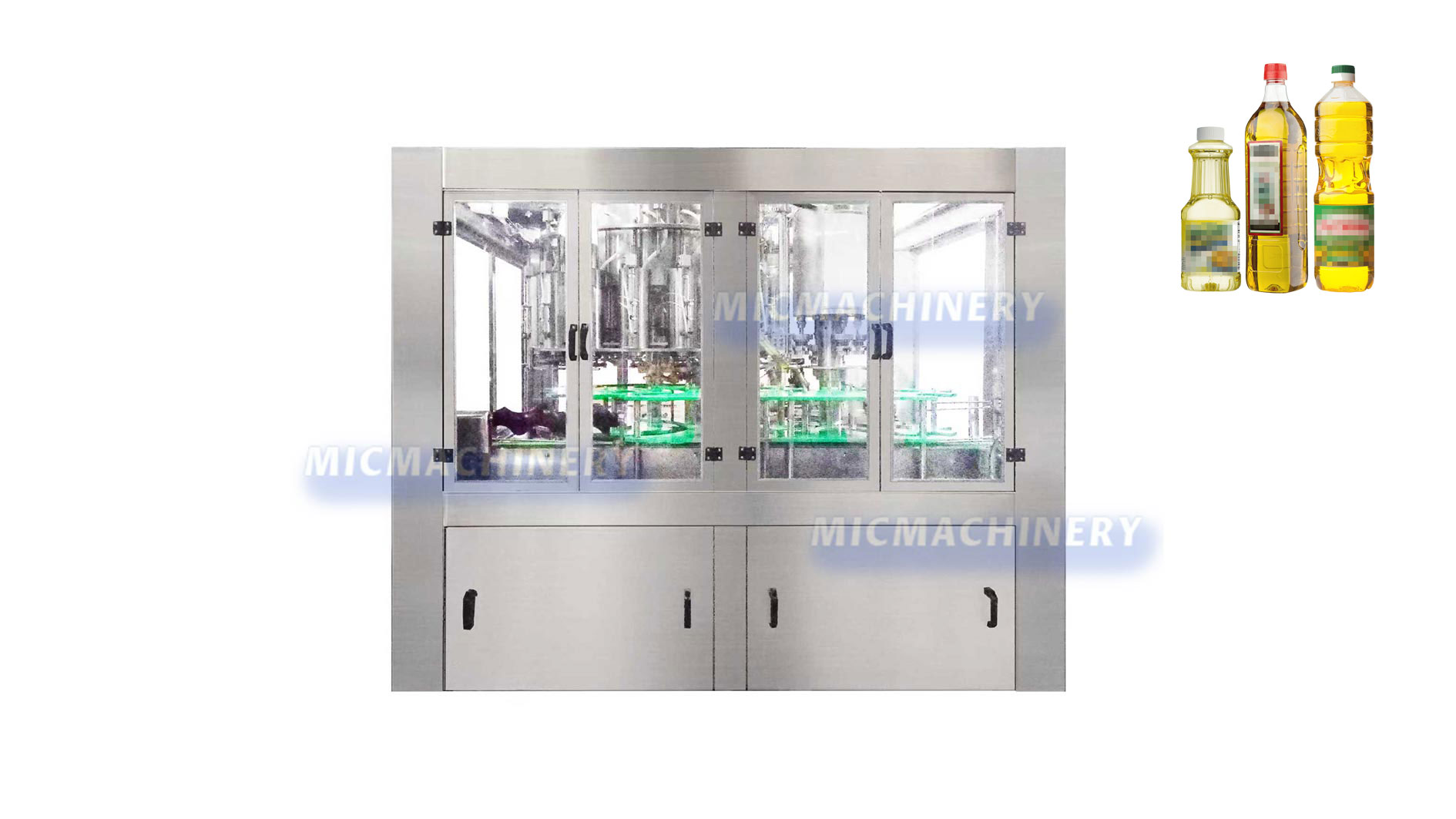
Top 20 PET Bottling Machine Factories in 2026
Top 20 PET Bottling Machine Factories in 2026
Have you ever grabbed a bottle of water, soda, or juice and noticed how lightweight yet durable it is? How does a PET bottling machine work to turn preforms into filled, sealed containers at incredible speeds? Can a PET bottling machine handle carbonated drinks without losing CO₂ or causing foaming? What are the main components of a PET bottling line beyond just the filler itself? Behind every convenient plastic bottle lies a highly automated system designed for speed, precision, and cost-efficiency. In this article, we will explore PET bottling technologies, troubleshooting tips, and the undeniable advantages of this versatile packaging format.
| Table of Contents |
| How Does a PET Bottling Machine Work? |
| List of 20 PET Bottling Machine Factories |
| List of 5 PET Bottling Products |
| Global Distribution of PET Bottling Machine Factories by Country |
How Does a PET Bottling Machine Work?
A PET bottling machine operates through a precise sequence of steps, often beginning with bottle formation:
1. Preform feeding and blow molding (optional) – In integrated systems, preforms are heated and blown into bottles just
before filling. This eliminates bottle storage and reduces contamination risk.
2. Bottle rinsing – Empty bottles are inverted and sprayed with sterile water, ionized air, or ozone to remove dust and
debris.
3. Bottle indexing – Bottles are transferred via air conveyors or starwheels into the filling section. PET bottles require
gentle handling to prevent deformation.
4. Lift and seal – Each bottle is lifted so its mouth presses against a rubber seal on the filling valve, creating an airtight
connection.
5. Filling – The filling valve opens, and liquid flows into the bottle. The method depends on the product: gravity for still
water, pressure for viscous liquids, or counter-pressure for carbonated beverages.
6. Snifting (for carbonated) – Gas pressure is released slowly before the bottle lowers, preventing foam eruptions.
7. Capping – The bottle moves to the capper, where a screw cap or snap cap is applied with controlled torque.
8. Labeling and packing – Bottles are labeled and packed into cartons or shrink-wrapped trays.
A PET bottling machine factory designs systems that integrate all these stages into a seamless operation, from preform to pallet. PET bottle filling machine factory specializes in the core filling technology, offering precision valves and pressure control systems for accurate fills.
Can a PET Bottling Machine Handle Carbonated Drinks?
Yes, PET bottling machines can handle carbonated drinks, but they require specific design features to prevent deformation and CO₂ loss:
• Counter-pressure (isobaric) filling – The bottle is pressurized with CO₂ before filling, matching the pressure of the soda
tank. This prevents CO₂ from escaping and keeps the drink carbonated.
• Base support systems – PET bottles for carbonated drinks have a petaloid base that requires support during
pressurization to prevent deformation. Machines include base cups or support plates.
• Thicker bottle walls – Carbonated PET bottles are designed with thicker walls and reinforced bases to withstand
internal pressure (typically 3–4 volumes of CO₂).
• Controlled fill speed – Filling too quickly can cause turbulence and foaming. Machines reduce fill speed for carbonated
products.
• Snifting valves – Gradually release gas pressure before the bottle lowers, preventing foam eruptions.
A plastic bottle filling machine factory offers counter-pressure fillers specifically designed for carbonated PET bottles, with air conveyors that transport bottles without mechanical contact and base support systems that prevent crushing during pressurization.
What Are the Main Components of a PET Bottling Line?
A complete PET bottling line includes several integrated components:
1. Preform unscrambler – Sorts and feeds preforms into the blow molder.
2. Blow molder – Heats preforms and blows them into bottle shapes.
3. Air conveyor – Transports empty bottles using high-velocity air, minimizing mechanical contact.
4. Bottle rinser – Inverts and sprays bottles with sterile water or ionized air.
5. Filling machine – Fills bottles using gravity, pressure, or counter-pressure.
6. Capper – Applies screw caps or snap caps with controlled torque.
7. Labeler – Applies sleeve labels, pressure-sensitive labels, or wrap-around labels.
8. Date coder – Prints production and expiry dates.
9. Shrink wrapper or case packer – Packs bottles into trays or cartons.
10. Palletizer – Stacks cases or trays onto pallets.
11. CIP system – Cleans all product-contact surfaces automatically.
A PET filling machine factory provides complete integrated lines that include all these components, ensuring seamless operation from preform to pallet.
Plastic bottle packing machine factory focuses on downstream equipment such as labelers, shrink wrappers, case packers, and palletizers that integrate seamlessly with the filler.
Troubleshooting and Maintenance Considerations
PET bottling machines face unique challenges due to lightweight containers that can deform, scratch, or collapse. Common issues include:
• Bottle deformation during filling – Excessive pressure or filling too quickly. Reduce fill speed and ensure bottles are
designed for the product.
• Inconsistent fill volumes – Worn valve seals, pressure fluctuations, or dirty level sensors. Replace seals quarterly and
clean sensors weekly.
• Leaking caps – Worn capper head, incorrect torque, or damaged bottle threads. Replace capper chucks every six
months.
• Bottle neck deformation – Excessive capping pressure or hot-fill temperature too high. Reduce capping force.
• Scratched or scuffed bottles – Air conveyor or starwheel misalignment. Inspect and adjust guide rails weekly.
• Preform or bottle jamming – Misaligned conveyor or starwheel. Lubricate moving parts weekly.
• Microbial contamination – Improper CIP cleaning. Run full CIP cycle at end of every production day.
Maintenance best practices:
• Daily: Rinse nozzles, inspect seals, check cap feeder, verify conveyor alignment.
• Weekly: Lubricate cam tracks and starwheel bearings, inspect air conveyor filters.
• Monthly: Calibrate fill sensors, test valve response, check capping torque.
• Quarterly: Replace all valve seals and diaphragms.
• Annually: Send filling valves and capper head for professional rebuild.
Filling Technology and Mechanisms
Modern PET bottling machines incorporate several advanced technologies:
• Gravity filling – Suitable for thin, still liquids. Low cost and simple.
• Pressure filling – Used for viscous liquids or hot-fill applications.
• Counter-pressure (isobaric) filling – Essential for carbonated beverages to preserve CO₂.
• Volumetric filling with flow meters – Accuracy: ±0.5%.
• Electronic level sensing – Capacitive or optical sensors adjust fill time in real time.
• No-drip filling nozzles – Spring-loaded or magnetic nozzles that close instantly.
• Servo-driven cappers – Electronic torque control ensures consistent cap tightness.
• CIP (clean-in-place) systems – Automatic cleaning without disassembly.
• Nitrogen dosing – Liquid nitrogen vaporizes in headspace, pushing out oxygen and stiffening lightweight bottles.
• Integrated blow molding – Forms bottles from preforms just before filling, eliminating storage and reducing
contamination.
Advantages and Benefits of PET Bottling Machines
Why choose a PET bottling machine over glass or aluminum lines?
• Lightweight – A 500ml PET bottle weighs 10–15 grams, compared to 200–300 grams for glass, reducing shipping
costs.
• Unbreakable – PET bottles do not shatter, making them safer for consumers and reducing product loss.
• Transparency – PET is nearly as clear as glass, allowing consumers to see the product inside.
• Design flexibility – PET can be molded into virtually any shape, size, or color.
• Cost-effective – PET resin is significantly cheaper than glass or aluminum.
• Recyclable – PET is one of the most recycled plastics globally.
• Speed – Automatic lines handle 10,000–60,000 bottles per hour.
• Hygiene – CIP-compatible designs prevent bacterial growth.
• Oxygen barrier options – Multi-layer bottles with oxygen scavengers extend shelf life.
• Integrated blow molding – Eliminates bottle storage and reduces contamination risk.
List of 20 PET Bottling Machine Factories
 |
Address: Room 1905, Youyi Building, Xincheng Avenue, Cixi, Ningbo, Zhejiang, China |
|
| Mic Machinery manufactures beverage filling and packaging equipment for bottled water, juice, carbonated drinks, and other liquid products. Its equipment can integrate bottle rinsing, filling, capping, labeling, and secondary packaging into complete production lines. As a PET bottling machine factory, Mic Machinery can configure machinery according to bottle volume, production capacity, beverage characteristics, and automation requirements. |
 |
Address: 152 Longquan Bay, Xueyan Town, Wujin, Changzhou, Jiangsu, China |
|
| BW Filling Machinery supplies industrial filling and packaging equipment for beverage manufacturers. Its systems can be configured for different container formats, filling volumes, and production requirements. Buyers can evaluate its equipment according to filling accuracy, operating speed, packaging compatibility, and line integration. |
 |
Address: 2224 Wukesong Road, Sanxing town, Zhangjiagang, Jiangsu, China |
|
| Zhangjiagang Mic Machinery provides beverage production and packaging machinery for different liquid products. Its equipment can be configured for PET bottles and integrated with rinsing, filling, and capping operations. The company offers equipment options for beverage manufacturers seeking customized bottling configurations. |
 |
Address: Böhmerwaldstraße 5, 93073 Neutraubling, Bavaria, Germany |
|
| Krones AG develops beverage processing, filling, and packaging systems for industrial production facilities. Its portfolio includes PET bottle filling, labeling, inspection, and secondary packaging technologies. Its integrated solutions support beverage manufacturers planning automated bottling operations with coordinated production processes. |
 |
Address: 1535 S State Road 39, La Porte, Indiana, United States of America |
|
| APACKS manufactures liquid filling and packaging machinery for food, beverage, cosmetic, and industrial applications. Its systems can accommodate different liquid properties, container sizes, and filling volumes. Buyers comparing a PET bottle filling machine factory should evaluate filling technology, bottle handling, production speed, and the level of automation required. |
 |
Address: Avenue de la Patrouille de France, 76930 Octeville-sur-Mer, Normandy, France |
|
| Sidel provides beverage packaging technology covering PET bottle production, filling, labeling, and secondary packaging. Its solutions serve manufacturers producing bottled water, carbonated soft drinks, juices, and other beverages. The company offers integrated equipment for production lines requiring coordinated bottle handling and filling operations. |
 |
Address: 50 Schoolhouse Road Somerset, New Jersey, United States of America |
|
| Cozzoli Machine Company manufactures filling and packaging machinery for liquid products and specialized applications. Its equipment portfolio includes filling systems designed for different container formats and production requirements. Manufacturers can assess suitable configurations according to dosing accuracy, container compatibility, cleaning procedures, and downstream packaging needs. |
 |
Address: Stuttgarter Straße 130, Waiblingen, Baden-Württemberg, Germany |
|
| Syntegon Technology GmbH develops processing and packaging equipment for food and other industries. Its machinery supports automated packaging operations with attention to process consistency and production efficiency. Beverage manufacturers can evaluate equipment based on product compatibility, hygiene requirements, maintenance access, and production-line integration. |
 |
Address: 4119 Fordleigh Road Baltimore, Maryland, United States of America |
|
| Filamatic specializes in automatic and semi-automatic liquid filling machinery. Its equipment can be configured for different filling volumes, container sizes, and production scales. Buyers can compare machine configurations according to filling accuracy, operating speed, changeover requirements, and available automation features. |
 |
Address: Juchostrasse 20, 44143 Dortmund, Germany |
|
| KHS GmbH supplies filling and packaging technology for beverage manufacturers worldwide. Its portfolio includes PET bottle filling systems, labeling equipment, and complete packaging-line solutions. Beverage producers can assess its equipment according to production capacity, bottle format, filling technology, and overall line efficiency. |
 |
Address: 2980 Scott St, Vista, CA 92081, United States |
|
| Accutek Packaging Equipment manufactures filling, capping, labeling, and packaging machinery for liquid products. Its equipment range includes configurations for different container types and production scales. Buyers can evaluate its systems according to bottle dimensions, filling volumes, automation requirements, and packaging-line compatibility. |
 |
Address: Via Italia, 43, Gessate Milano, Lombardy, Italy |
|
| Ronchi Mario S.p.A. specializes in automatic filling machinery for liquid products. Its systems are designed for industrial packaging operations requiring controlled filling and consistent production performance. Beverage manufacturers can assess equipment specifications, container compatibility, production output, and integration requirements. |
 |
Address: Via G. Garibaldi, 34N, Bonate Sotto, Lombardy, Italy |
|
| Comac develops filling and packaging systems for beverages and other liquid products. Its machinery can be configured for different production capacities and packaging requirements. Manufacturers comparing a plastic bottle packing machine factory should consider bottle handling, filling operations, capping, labeling, and secondary packaging capabilities. |
 |
Address: Olympus House, Mill Green Road, Haywards Heath, West Sussex, United Kingdom |
|
| Adelphi Packaging Machinery supplies filling and packaging equipment for liquid and semi-liquid products. Its machinery serves different applications with varying container and production requirements. Beverage producers can evaluate equipment based on filling volume, cleaning needs, available factory space, and operational flexibility. |
 |
Address: N15 W23500 Stone Ridge Drive, Waukesha, Wisconsin, United States of America |
|
| Federal Mfg. develops filling and packaging systems for food, beverage, and other industries. Its equipment can be configured for different container types and production-line requirements. Buyers should review filling performance, bottle compatibility, maintenance access, and the suitability of each machine for their intended application. |
 |
Address: Hofäckerstraße 9 Crailsheim, Baden-Württemberg, Germany |
|
|
Groninge manufactures filling and packaging equipment for liquid products and specialized industrial applications. Its systems focus on controlled filling operations, container handling, and automated process execution. Manufacturers can evaluate configurations according to product characteristics, production targets, cleaning procedures, and line integration needs. |
 |
Address: Ko-58 Mameda-Honmachi, Kanazawa, Ishikawa, Japan |
|
| Shibuya Corporation supplies industrial machinery and production systems for food, beverage, and other sectors. Its technologies cover processing, filling, packaging, and related automation requirements. Beverage manufacturers can assess potential solutions based on container specifications, production capacity, process integration, and factory layout. |
 |
Address: 15-39 130th St, College Point, New York, United States of America |
|
| Filling Equipment Company provides liquid filling machinery for a range of industrial applications. Its equipment can be configured according to container format, filling volume, and required production output. Buyers comparing a plastic bottle filling machine factory should examine bottle compatibility, filling accuracy, machine speed, and the availability of integrated capping and labeling equipment. |
 |
Barry-Wehmiller Packaging Systems Address: 8020 Forsyth Boulevard, St. Louis, Missouri, United States of America |
|
| Barry-Wehmiller Packaging Systems provides packaging machinery and integrated solutions for multiple industries. Its equipment supports different packaging processes that can be coordinated within broader production operations. Beverage manufacturers can compare potential systems according to throughput, packaging format, automation requirements, and long-term operating costs. |
 |
Address: 1535 South State Road 39, La Porte, IN 46350, United States |
|
| E-PAK Machinery manufactures liquid filling, capping, labeling, and packaging equipment for various industries. Its systems can be configured for different container sizes, filling volumes, and automation levels. Buyers evaluating a PET filling machine factory should compare filling methods, bottle specifications, production capacity, and integration with downstream packaging equipment. |
Global Distribution of PET Bottling Machine Factories by Country

| Country | Number of Companies | Share (%) |
 |
USA | 8 | 40% |
 |
Germany | 4 | 20% |
 |
China | 3 |
15% |
 |
Italy | 2 | 10% |
 |
France | 1 | 5% |
 |
United Kingdom | 1 | 5% |
 |
Japan | 1 | 5% |
List of 5 PET Bottling Machine Products
 |
|
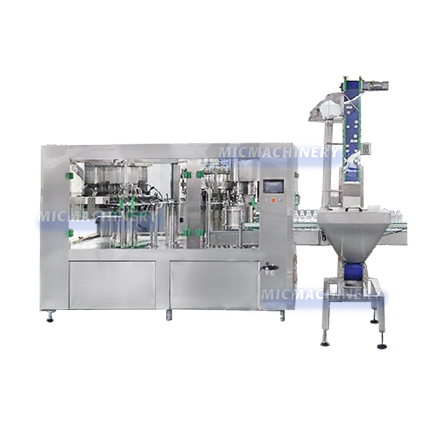
18-18-6 Carbonated PET Bottling Machine
An 18-18-6 carbonated PET bottling machine has 18 rinsing heads, 18 filling heads, and 6 capping heads for efficient rinsing, filling, and capping. It ensures precise filling, hygienic operation, and reliable performance for medium to large-scale production. |
|
 |
 |
|
A 14-12-5 PET bottling machine features 14 rinsing heads, 12 filling heads, and 5 capping heads to efficiently rinse, fill, and cap PET bottles. It ensures accurate filling, hygienic operation, and reliable performance for medium-scale beverage production. |
|
|
 |
|
An 18-18-6 PET bottling machine features 14 rinsing heads, 12 filling heads, and 5 capping heads to efficiently rinse, fill, and cap PET bottles. It ensures accurate filling, hygienic operation, and reliable performance for medium-scale beverage production. |
|
|
 |
|
An 8-8-3 PET bottling machine features 8 rinsing heads, 8 filling heads, and 3 capping heads for efficient rinsing, filling, and capping of PET bottles. It ensures accurate filling, hygienic operation, and reliable performance for small to medium-scale beverage production. |
|
|
 |
|
A 24-24-8 PET bottling machine features 24 rinsing heads, 24 filling heads, and 8 capping heads for fast, efficient rinsing, filling, and capping of PET bottles. It ensures precise filling, hygienic operation, and high-speed performance for large-scale beverage production. |
|
|