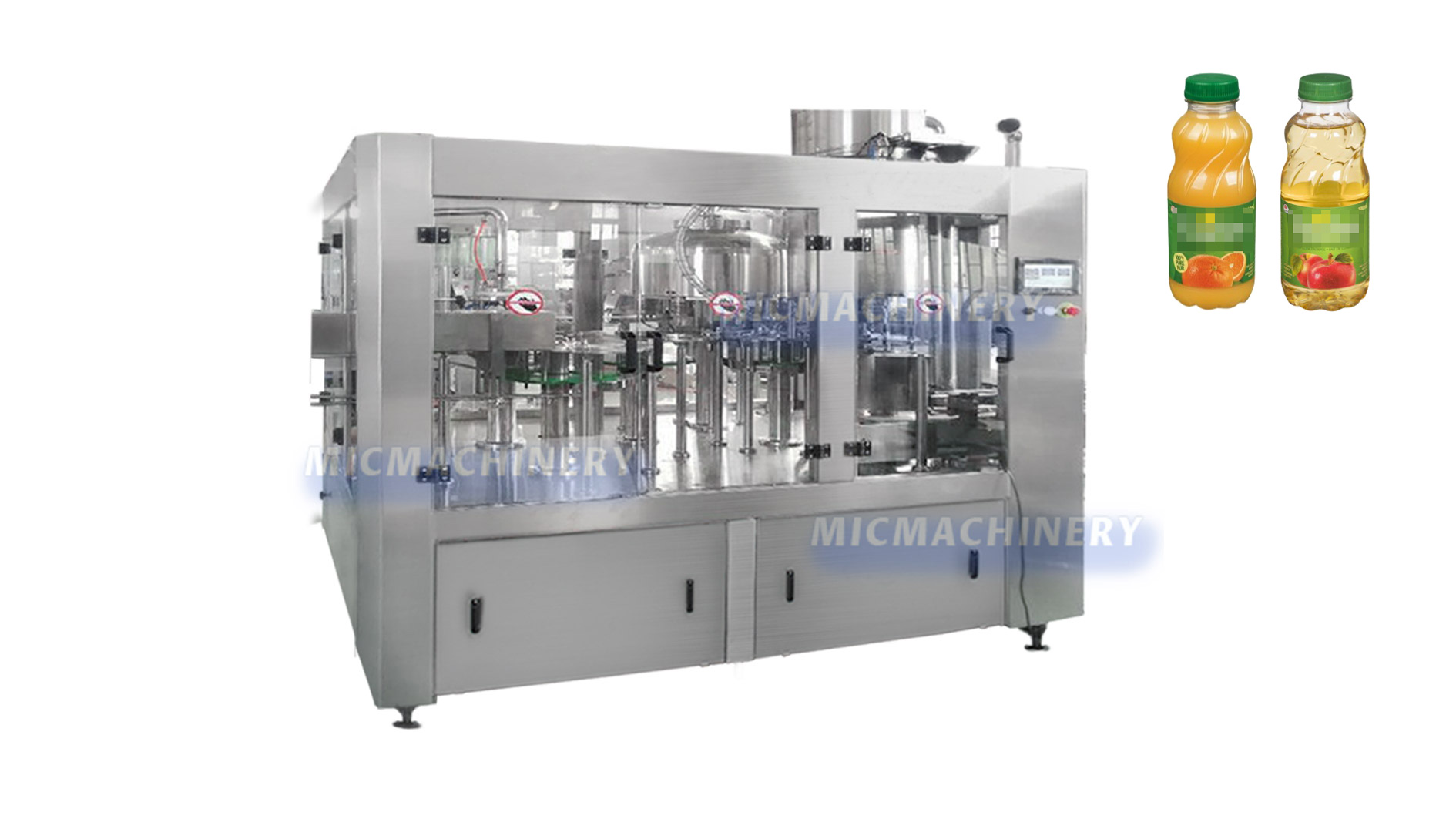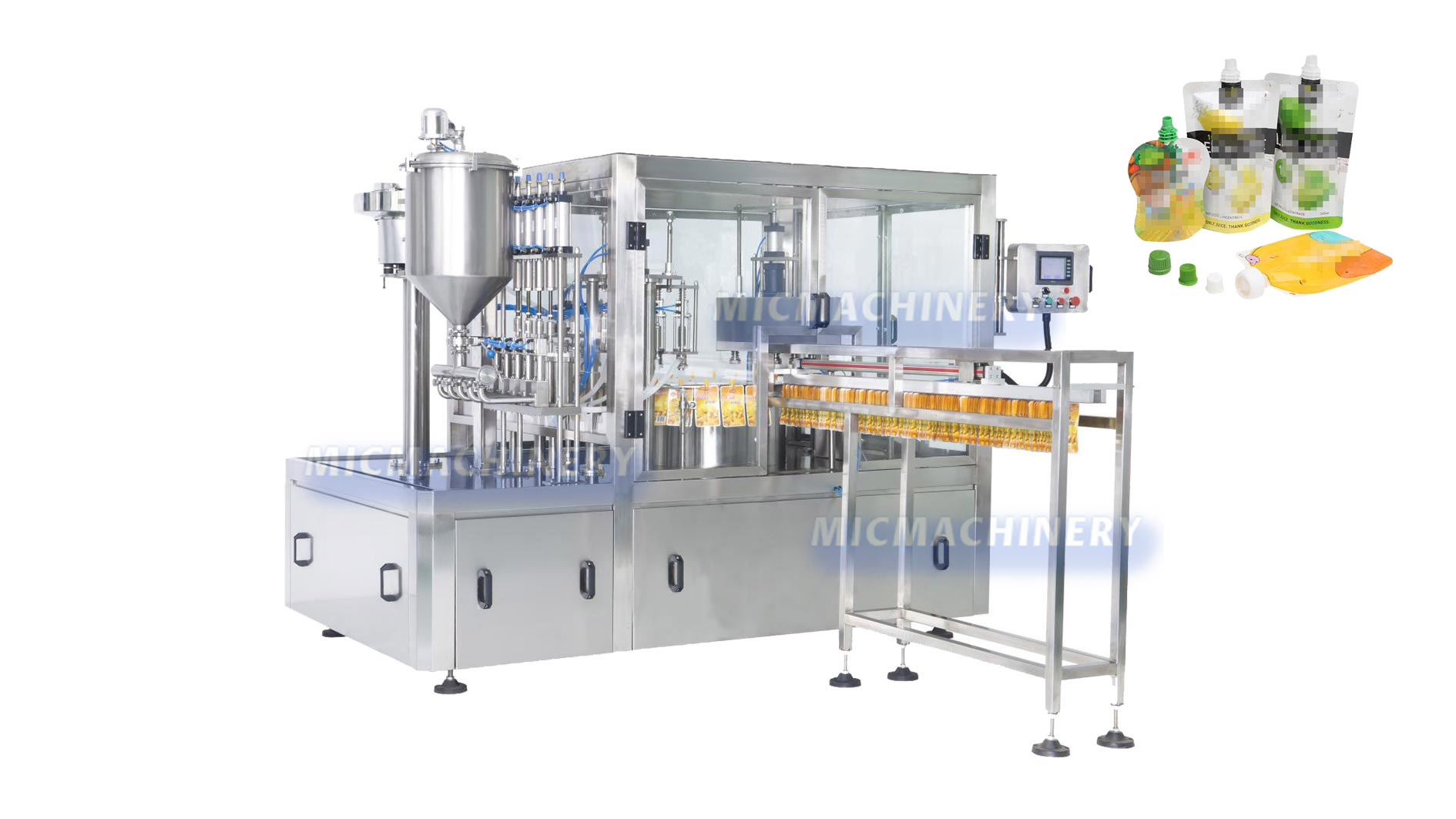
Top 20 Juice Filling and Sealing Machine Companies in 2026
Top 20 Juice Filling and Sealing Machine Companies in 2026
Have you ever watched a juice production line fill and seal hundreds of bottles or pouches per minute and wondered how it maintains hygiene and accuracy at such speed? What are the different types of juice filling machines available for clear apple juice versus thick mango smoothies? How much does a juice filling machine cost for a small startup versus a large production facility? How to choose a juice filling machine that matches your product, packaging format, and budget? Behind every refreshing glass of orange, apple, or litchi juice lies a sophisticated filling and sealing system designed to preserve flavor, color, and nutrients. In this article, we will explore juice filling technologies, troubleshooting tips, and the undeniable benefits of automated filling.
What Are the Different Types of Juice Filling Machines?
Juice filling machines fall into several categories:
1. Piston fillers – Ideal for high-pulp juices (orange, mango, smoothies). Accuracy: ±0.5–1%. Does not foam easily.
2. Gravity fillers – Suitable for clear, low-pulp juices (apple, white grape). Low cost but prone to foaming.
3. Pressure fillers – Used for hot-fill applications and higher speeds.
4. Volumetric flow meter fillers – Excellent for thin juices but can clog with pulp.
5. Aseptic fillers – Essential for shelf-stable juice without preservatives.
6. Pouch fillers (form-fill-seal) – Create, fill, and seal pouches from a roll of film.
7. Cup fillers – Fill pre-formed cups and seal with foil or plastic lids.
For high-pulp juices like mango, mango juice filling machine companies offer specialized piston fillers with wide-diameter nozzles to preserve pulp integrity. Semi automatic juice filling machine companies provide affordable units for startups, farms, and small juice bars.
How Much Does a Juice Filling Machine Cost?
The cost varies significantly based on capacity, automation level, and container type:
• Manual piston filler (100–300 containers/hour): $2,000 – $8,000
• Semi-automatic filler (300–1,500 containers/hour): $8,000 – $30,000
• Automatic inline filler (1,000–6,000 containers/hour): $40,000 – $150,000
• Rotary automatic filler (6,000–30,000 containers/hour): $100,000 – $400,000+
• Complete filling and sealing line: $150,000 – $1,500,000+
Fully automatic juice filling machine companies provide high-speed systems with PLC controls for continuous 24/7 operation. For hot-filled juices, hot juice filling machine companies provide heated holding tanks and temperature-controlled valves.
How to Choose a Juice Filling Machine?
Selecting the right machine requires consideration of several factors:
1. Juice type – Clear or high-pulp? Determines whether gravity, piston, or pressure filling is best.
2. Container format – Bottles, pouches, cups, or cartons?
3. Production volume – Under 1,000 containers/hour: semi-automatic. Above 10,000: rotary.
4. Temperature – Cold-fill, hot-fill, or aseptic?
5. Shelf life – Long shelf life requires aseptic or hot-fill with nitrogen purging.
6. Budget – Include capping, labeling, and packing equipment.
7. Space – Rotary fillers have smaller footprint per container per hour.
8. Future expansion – Choose a machine that can be upgraded.
Juice bottle filling and sealing machine companies offer integrated systems combining filling and capping in one operation. Juice pouch filling and sealing machine companies focus on flexible packaging with vertical form-fill-seal machines for single-serve portions.
Troubleshooting and Maintenance Considerations
Common issues and solutions:
• Clogged filling nozzles – Use wider nozzles (10–15mm) and clean every 2–4 hours.
• Foaming during filling – Use bottom-up filling tubes and reduce speed.
• Inconsistent fill volumes – Replace seals quarterly and install a pressure regulator.
• Container neck residue – Install anti-drip nozzles.
• Seal failure – Check seal bar temperature daily and ensure jaws are clean.
• Oxidation or browning – Ensure deaerator works and use nitrogen purging.
• Bacterial contamination – Run full CIP cycle at end of every production day.
Maintenance best practices:
• Daily: Flush system, inspect seals, clean nozzles.
• Weekly: Lubricate parts, check conveyors.
• Monthly: Calibrate fill volume, test seal integrity.
• Quarterly: Replace seals and gaskets.
• Annually: Rebuild filling valves and seal bars.
Filling Technology and Mechanisms
Modern juice filling and sealing machines incorporate:
• Piston fillers with servo drive – Precise volume control and quick changeover.
• Bottom-up filling – Prevents splashing and foaming.
• Anti-drip nozzles – Snap shut instantly after filling.
• Magnetic flow meters – Accuracy: ±0.3%.
• Hot-fill technology – Fills at 185–205°F, sterilizing container interior.
• Aseptic filling – Shelf-stable juice without refrigeration.
• Nitrogen dosing – Pushes out oxygen and stiffens containers.
• CIP systems – Automatic cleaning without disassembly.
• Heat sealing – Precise temperature and pressure for consistent seals.
Advantages and Benefits of Juice Filling Machines
• Extended shelf life – Aseptic and hot-fill keep juice fresh for 6–12 months.
• Reduced oxidation – Preserves vitamins and natural color.
• Pulp handling – Wide nozzles accommodate 15–25% pulp.
• Consistency – ±0.5% fill accuracy reduces product giveaway.
• Speed – 5,000–40,000 containers per hour.
• Hygiene – Closed systems and CIP prevent contamination.
• Versatility – Changeover parts handle different container sizes.
• Labor savings – One operator replaces 5–15 workers.
• Seal integrity – Precise temperature and pressure ensure consistent seals.
• Reduced waste – Precision filling minimizes product and material waste.
List of 20 Juice Filling and Sealing Machine Companies
 |
Address: Room 1905, Youyi Building, Xincheng Avenue, Cixi, Ningbo, Zhejiang, China |
|
| Mic Machinery provides beverage filling and packaging equipment for juice, water, and other liquid products. Its solutions can integrate bottle rinsing, filling, capping, labeling, and secondary packaging according to production requirements. For fruit beverage projects, buyers comparing mango juice filling machine companies can evaluate equipment compatibility with juice viscosity, pulp content, bottle sizes, and required output. |
 |
Address: 152 Longquan Bay, Xueyan Town, Wujin, Changzhou, Jiangsu, China |
|
| BW Filling Machinery supplies industrial filling and packaging equipment for beverage manufacturers. Its systems can be configured for different container formats, production speeds, and levels of automation. Beverage producers can assess its equipment based on filling accuracy, line integration, maintenance requirements, and operating efficiency. |
 |
Address: 2224 Wukesong Road, Sanxing town, Zhangjiagang, Jiangsu, China |
|
| Zhangjiagang Mic Machinery provides beverage production and packaging equipment for different liquid products. Its machinery can be configured to combine filling, capping, and other packaging operations within an integrated production line. The company serves manufacturers seeking adaptable equipment for different bottle sizes and production volumes. |
 |
Address: Böhmerwaldstraße 5, 93073 Neutraubling, Bavaria, Germany |
|
| Krones AG develops beverage processing, filling, and packaging systems for industrial production facilities. Its portfolio includes technologies for filling, labeling, container handling, and end-of-line packaging. The company's integrated solutions are suitable for beverage manufacturers planning automated production lines with coordinated equipment and high output. |
 |
Address: 1535 S State Road 39, La Porte, Indiana, United States of America |
|
| APACKS manufactures liquid filling machinery for food, beverage, cosmetic, and industrial applications. Its equipment can accommodate different liquid properties, container sizes, and filling volumes. Buyers comparing semi automatic juice filling machine companies can assess equipment based on batch size, operator involvement, changeover requirements, and budget. |
 |
Address: Avenue de la Patrouille de France, 76930 Octeville-sur-Mer, Normandy, France |
|
| Sidel provides packaging solutions for beverages, including juice, water, and other non-carbonated products. Its technologies cover bottle production, filling, labeling, and secondary packaging. Beverage manufacturers can consider its integrated systems when planning production lines that require coordinated container handling and automated packaging processes. |
 |
Address: 50 Schoolhouse Road Somerset, New Jersey, United States of America |
|
| Cozzoli Machine Company manufactures filling and packaging machinery for liquid and other product applications. Its equipment portfolio includes filling systems designed for different production requirements and container formats. Juice producers can evaluate suitable configurations according to dosing accuracy, cleaning procedures, and integration with downstream sealing equipment. |
 |
Address: Stuttgarter Straße 130, Waiblingen, Baden-Württemberg, Germany |
|
| Syntegon Technology GmbH develops processing and packaging equipment for food and other industries. Its solutions include automated packaging technologies designed to support consistent production performance. Manufacturers selecting equipment can review factors such as product handling, packaging material compatibility, operational flexibility, and maintenance access. |
 |
Address: 4119 Fordleigh Road Baltimore, Maryland, United States of America |
|
| Filamatic specializes in liquid filling machinery for a variety of industrial applications. Its equipment includes automatic and semi-automatic configurations that can be selected according to production volume and container requirements. Buyers researching fully automatic juice filling machine companies should compare filling speed, dosing technology, container handling, and the degree of integration required for their production lines. |
 |
Address: Juchostrasse 20, 44143 Dortmund, Germany |
|
| KHS GmbH supplies filling and packaging technology for beverage manufacturers around the world. Its systems cover filling, labeling, packaging, and related production-line processes. The company offers solutions for operations that require coordinated machinery, repeatable production performance, and efficient use of factory resources. |
 |
Address: 2980 Scott St, Vista, CA 92081, United States |
|
| Accutek Packaging Equipment manufactures filling, capping, labeling, and packaging machinery for liquid products. Its equipment can serve different production scales, from smaller operations to automated manufacturing lines. Juice producers can compare available configurations according to bottle dimensions, filling volumes, changeover frequency, and production targets. |
 |
Address: Via Italia, 43, Gessate Milano, Lombardy, Italy |
|
| Ronchi Mario S.p.A. specializes in automatic filling machinery for liquid products. Its systems are designed to support industrial packaging operations with attention to filling performance and production consistency. Manufacturers can evaluate its equipment according to container type, product characteristics, line speed, and integration requirements. |
 |
Address: Via G. Garibaldi, 34N, Bonate Sotto, Lombardy, Italy |
|
| Comac develops filling and packaging systems for beverages and other liquid products. Its machinery can be incorporated into production lines that combine filling with capping, sealing, and additional packaging operations. Buyers comparing hot juice filling machine companies should examine temperature control, compatible container materials, thermal processing requirements, and the cooling process after filling. |
 |
Address: Olympus House, Mill Green Road, Haywards Heath, West Sussex, United Kingdom |
|
| Adelphi Packaging Machinery supplies filling and packaging equipment for liquid and semi-liquid products. Its portfolio includes machinery suited to specialized production applications and different container formats. Juice manufacturers can assess equipment options based on filling volume, product handling, cleaning needs, and the available factory space. |
 |
Address: N15 W23500 Stone Ridge Drive, Waukesha, Wisconsin, United States of America |
|
| Federal Mfg. develops filling and packaging machinery for food, beverage, and other industries. Its equipment can be configured for different container types and production requirements. Manufacturers planning a juice packaging line can review machine capacity, filling consistency, automation features, and compatibility with downstream packaging processes. |
 |
Address: Hofäckerstraße 9 Crailsheim, Baden-Württemberg, Germany |
|
|
Groninge manufactures filling and packaging equipment for liquid products and specialized industrial applications. Its systems focus on controlled filling operations, container handling, and automated process execution. Buyers can assess potential configurations according to product sensitivity, production targets, cleaning procedures, and integration with other equipment. |
 |
Address: Ko-58 Mameda-Honmachi, Kanazawa, Ishikawa, Japan |
|
| Shibuya Corporation supplies industrial machinery and production systems for food, beverage, and other sectors. Its technologies support processing, filling, packaging, and related automation requirements. Buyers researching juice bottle filling and sealing machine companies should compare bottle compatibility, filling accuracy, cap or seal specifications, and the availability of integrated line solutions. |
 |
Address: 15-39 130th St, College Point, New York, United States of America |
|
| Filling Equipment Company provides liquid filling machinery for a range of product types and packaging applications. Its equipment can be selected according to required output, filling volume, and container design. Juice producers should evaluate how well a proposed filling system integrates with sealing equipment, conveyors, and quality-control procedures. |
 |
Barry-Wehmiller Packaging Systems Address: 8020 Forsyth Boulevard, St. Louis, Missouri, United States of America |
|
| Barry-Wehmiller Packaging Systems provides packaging machinery and integrated production solutions for various industries. Its capabilities cover multiple packaging processes, helping manufacturers coordinate equipment across a production line. Beverage companies can evaluate potential systems based on throughput, packaging format, automation requirements, and long-term operational needs. |
 |
Address: 1535 South State Road 39, La Porte, IN 46350, United States |
|
| E-PAK Machinery manufactures liquid filling, capping, labeling, and packaging equipment for different industries. Its systems can be configured for various container sizes, production volumes, and automation levels. Companies comparing juice pouch filling and sealing machine companies should assess pouch material compatibility, filling accuracy, seal integrity, product characteristics, and the required packaging speed. |
Global Distribution of Juice Filling and Sealing Machine Companies by Country

| Country | Number of Companies | Share (%) |
 |
USA | 8 | 40% |
 |
Germany | 4 | 20% |
 |
China | 3 |
15% |
 |
Italy | 2 | 10% |
 |
France | 1 | 5% |
 |
United Kingdom | 1 | 5% |
 |
Japan | 1 | 5% |
List of 8 Juice Filling and Sealing Machine Products
 |
|
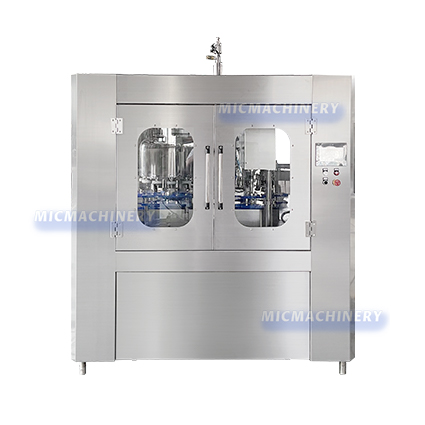
12-1 Juice Can Filling Machine
A 12-1 juice can filling machine is designed with 12 filling heads and 1 sealing head to efficiently fill juice into cans and seal them in a single process. It ensures accurate dosing, hygienic operation, and stable performance, making it suitable for medium to large-scale juice production. |
|
 |
 |
|
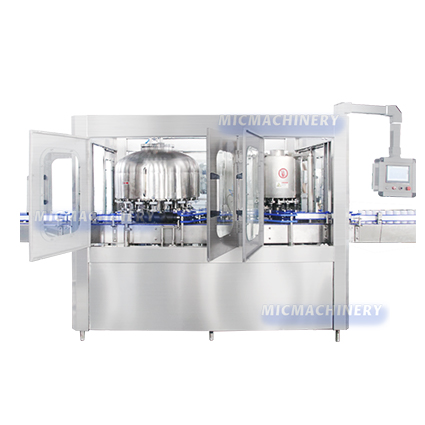
18-6 Juice Can Filling Machine
An 18-6 juice can filling machine is equipped with 18 filling heads and 6 sealing heads to handle juice canning with high speed and precision. It ensures accurate filling, reliable sealing, and hygienic operation, making it ideal for large-scale juice production lines. |
|
|
 |
|
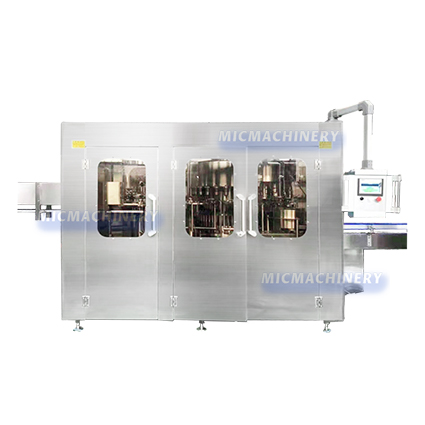
18-18-6 Juice Bottle Filling Machine
An 18-18-6 juice bottle filling machine is designed with 18 rinsing heads, 18 filling heads, and 6 capping heads to complete bottle rinsing, juice filling, and capping in one integrated process. It ensures accurate filling, hygienic operation, and high efficiency, making it ideal for medium to large-scale juice production. |
|
|
 |
|
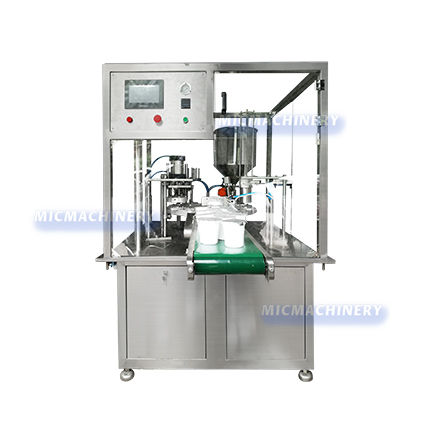
A juice cup filling machine is designed to fill and seal juice into cups quickly and hygienically. It ensures accurate filling, secure sealing, and efficient production, making it ideal for beverage companies producing ready-to-drink juice cups. |
|
|
 |
|
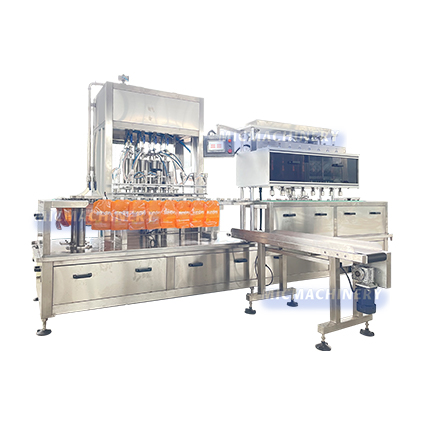
Juice Spout Pouch Filling Machine
A juice spout pouch filling machine is designed to fill juice into spouted pouches with precision and efficiency. It ensures accurate dosing, hygienic operation, and reliable sealing, making it ideal for beverage manufacturers producing convenient, ready-to-drink juice packaging. |
|
|
 |
|
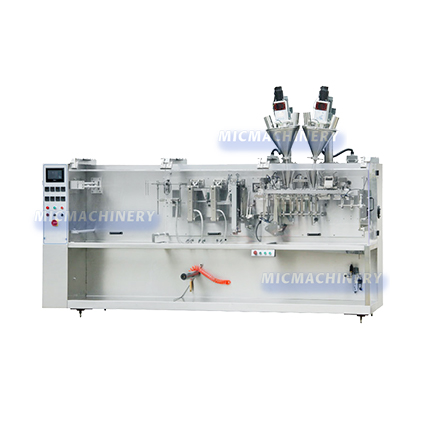
A juice pouch packing machine is used to efficiently fill and seal juice into flexible pouches. It ensures accurate filling, hygienic packaging, and smooth operation, making it ideal for beverage manufacturers producing convenient, ready-to-drink juice pouches. |
|
|
 |
|
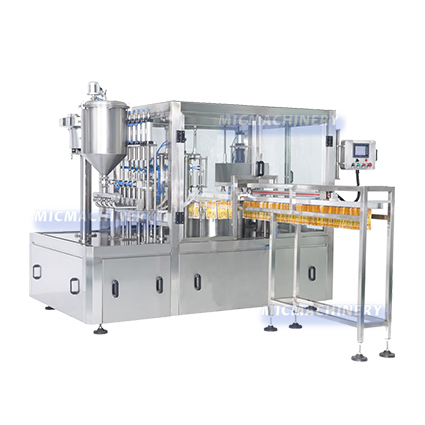
Juice Spout Pouch Packing Machine
A juice spout pouch packing machine is designed to fill and seal juice into spouted pouches in a clean and efficient process. It ensures precise filling, secure sealing, and hygienic packaging, making it ideal for beverage manufacturers focused on convenient juice pouch production. |
|
|
 |
|
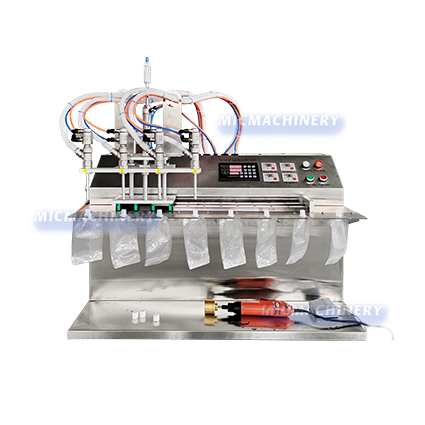
Semi-auto Juice Spout Pouch Filling Machine
A semi-auto juice spout pouch filling machine is used to fill juice into spouted pouches with partial automation. It combines manual handling with automated filling to ensure accurate dosing, hygienic packaging, and cost-effective production, making it suitable for small to medium-scale juice manufacturers. |
|
|